Body Systems
S2 lessons on body organisation, digestion, energy in food, food tests, diet, the lungs, the heart and exercise. Choose a lesson to open it.
- Lesson 1Body Organisation
- Lesson 2The Digestive System
- Lesson 3Energy in Food
- Lesson 4Energy in Food (Skills)
- Lesson 5Food Tests
- Lesson 6Why do we eat?
- Lesson 7The Respiratory System
- Lesson 8Measuring Lung Capacity
- Lesson 9The Heart
- Lesson 10The Effect of Exercise on Heart Rate
- Lesson 11Measuring Health (coming soon)
- Lesson 12Researching Body Systems (coming soon)
Lesson 1 - Body Organisation
Learning Intentions
- The body is organised into cells, tissues, organs and systems.
- Give examples of a cell, tissue, organ and system in the human body.
Your Body
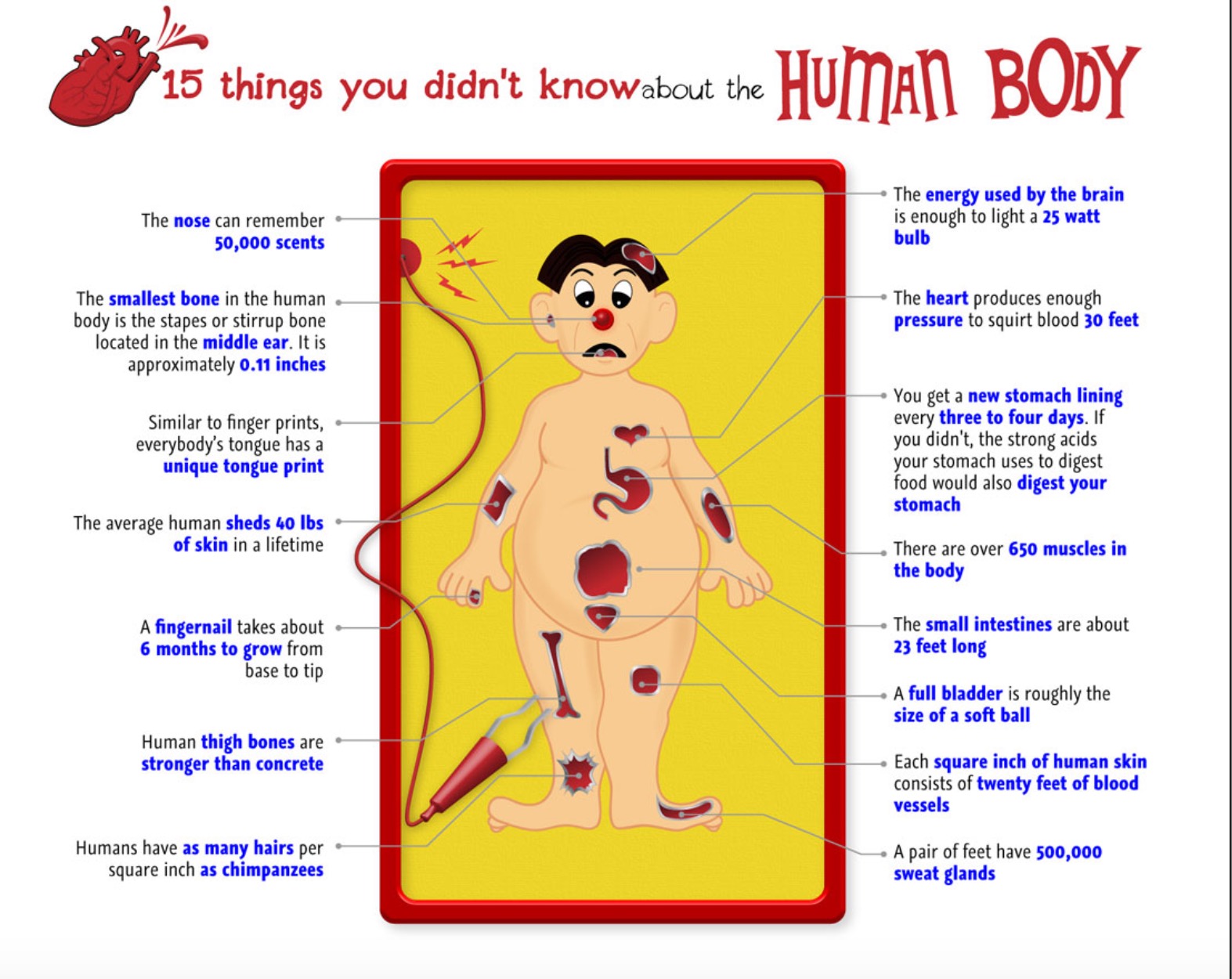
Your body is an amazing machine! It has thousands of different parts, all working together to keep you alive. The adult body is made up of:
- around 30 trillion cells
- 206 bones
- over 600 muscles
- 22 internal organs
What is every part of the body made up of?

Note - Body Organisation (handout)
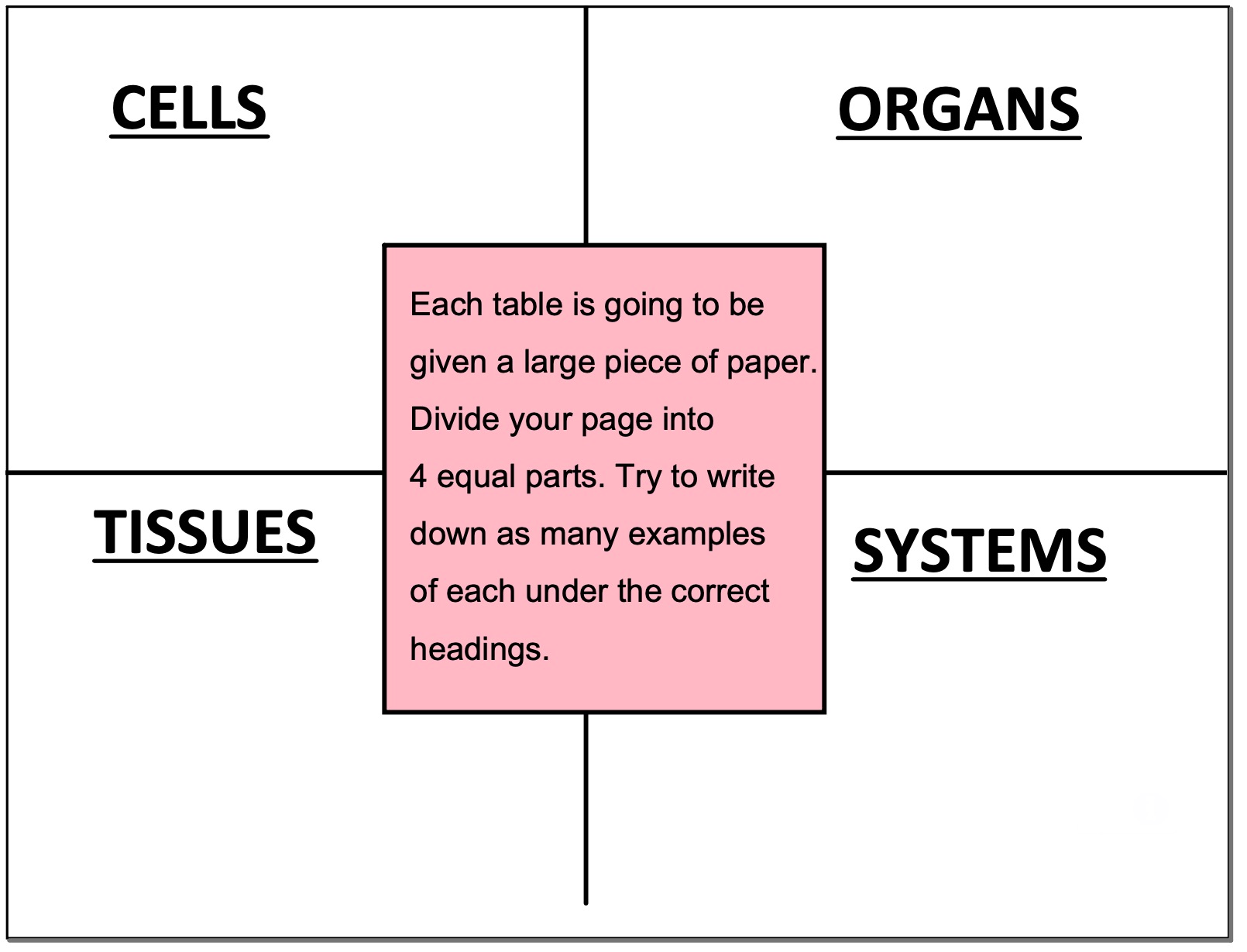
- C____ are the basic building blocks of life. The body is made up of millions of different C____.
- A T_____ is made up of cells that work together.
- An O____ is made from G_____ of tissues that work together.
- A S_____ is made up from a group of organs that work together
Cell→T_____→Organ→S_____
Activity - Body Organisation
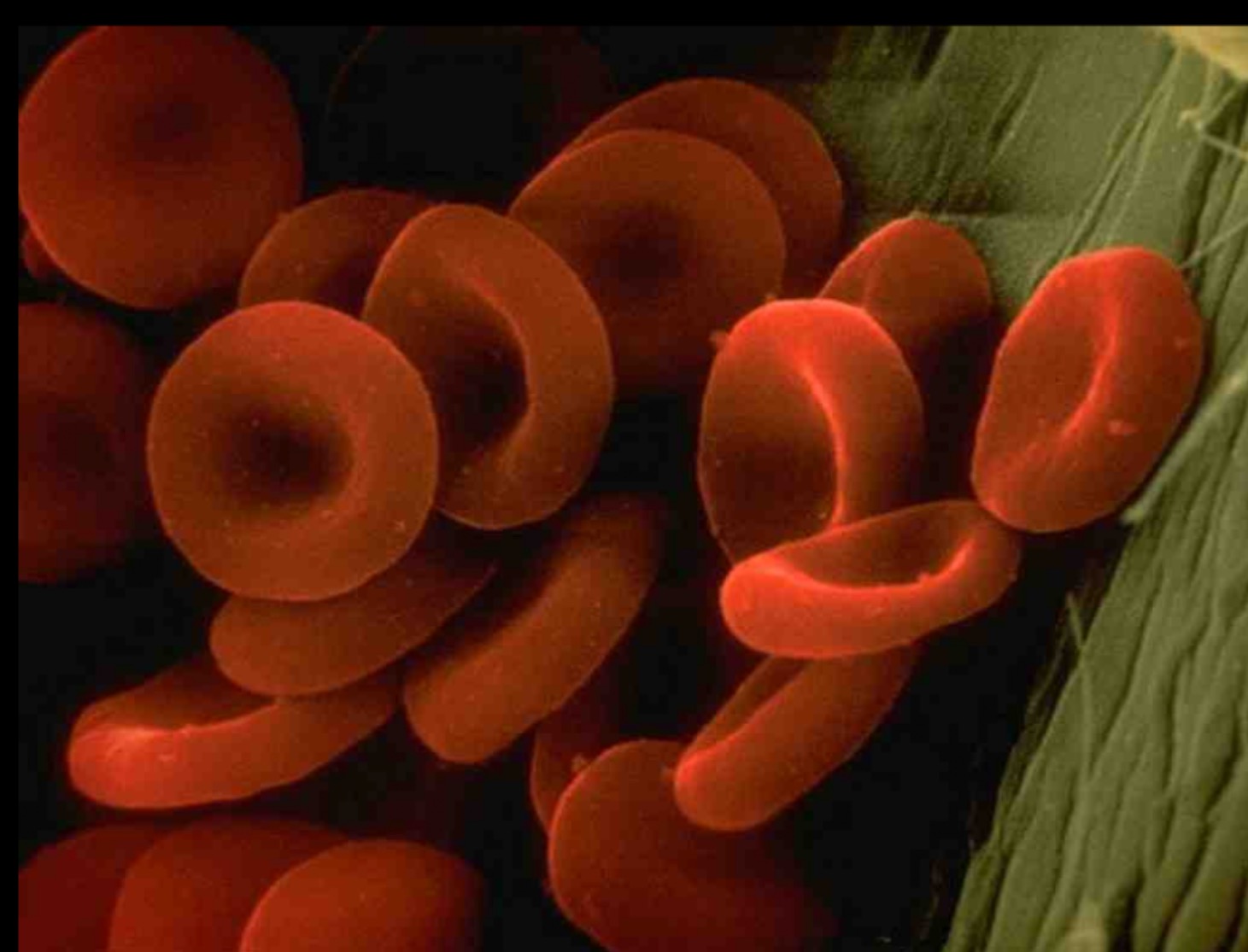
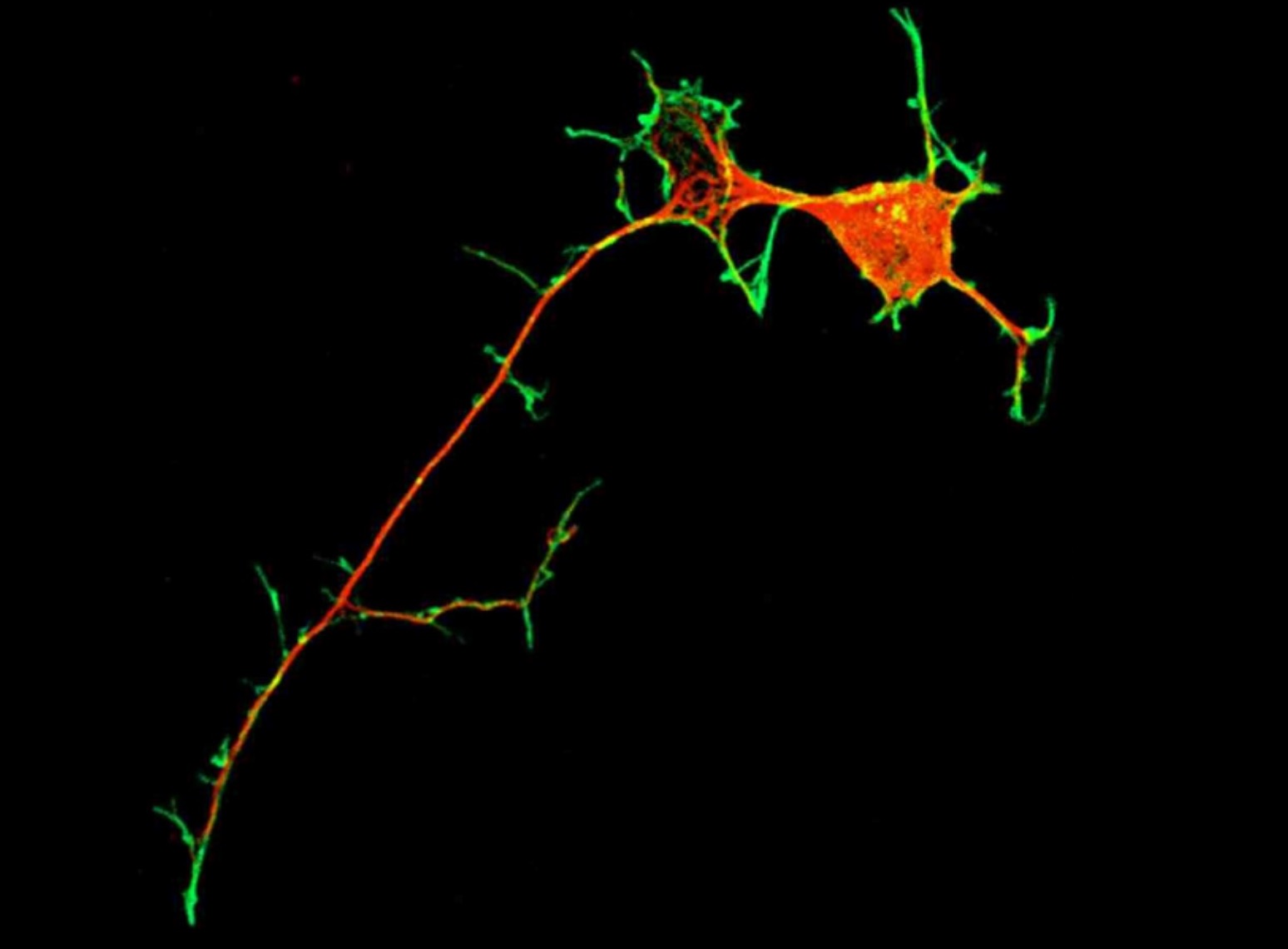
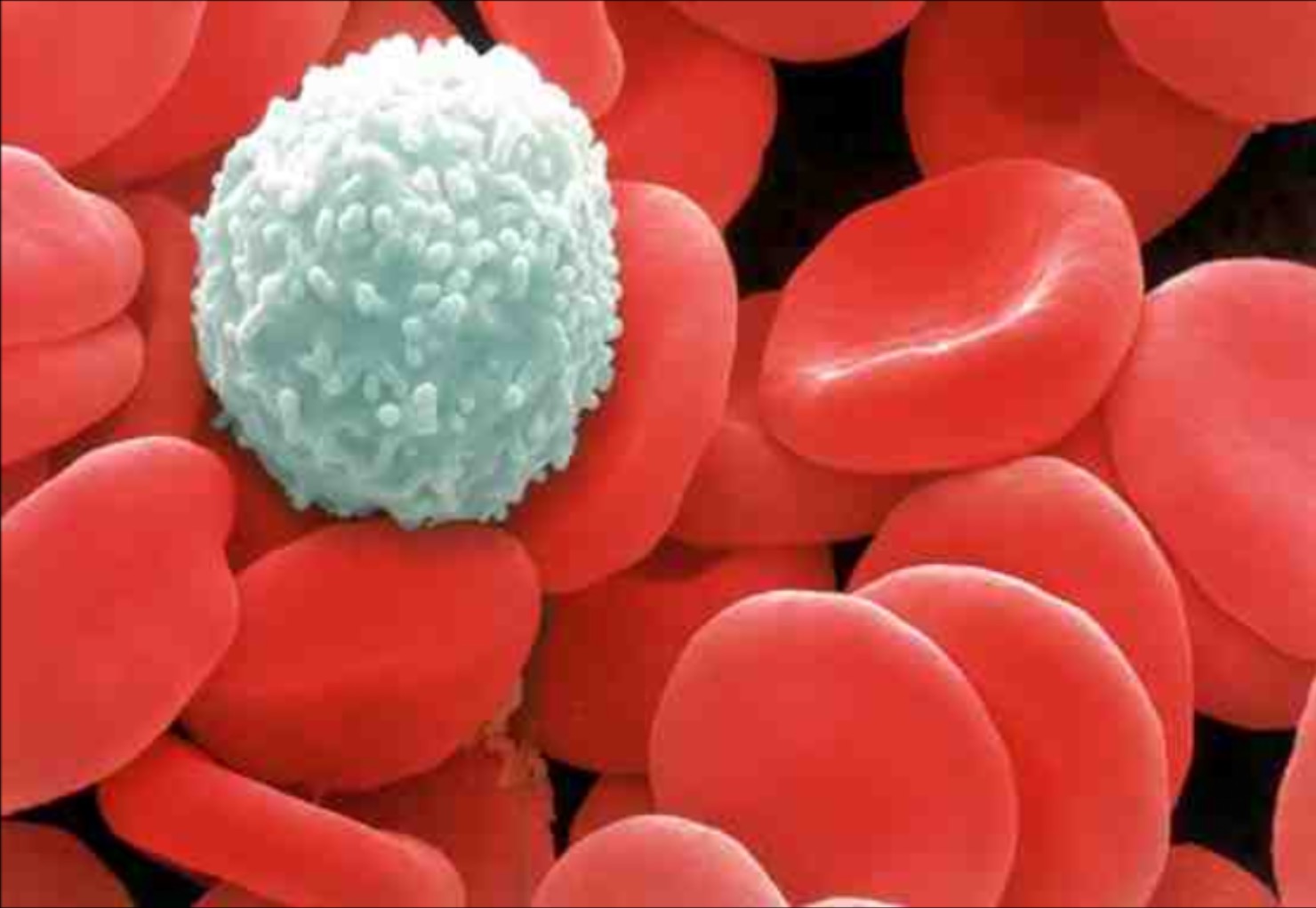
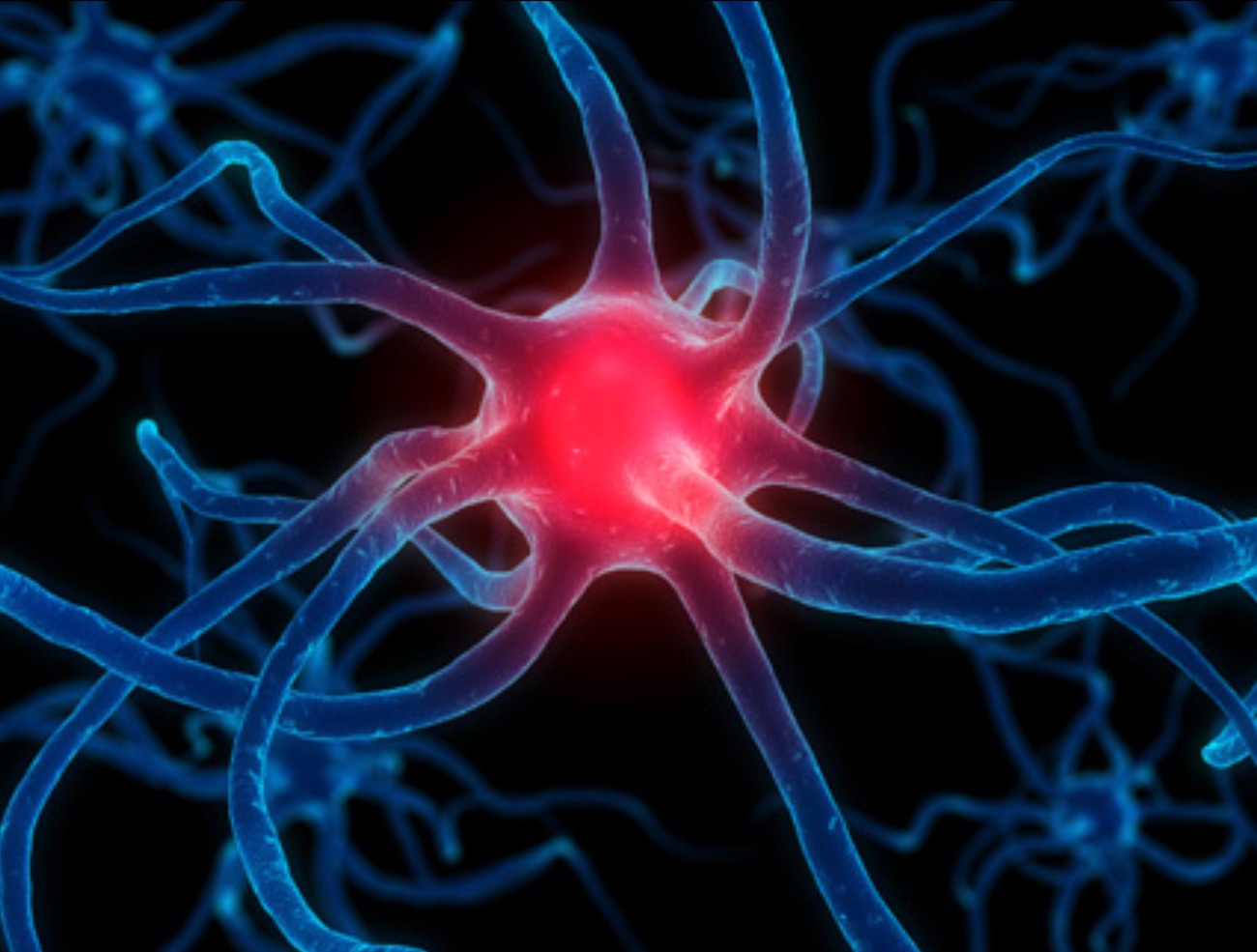
Specialised Cells
Can you tell what types of cells these are?


Tissues
The human body has four main types of tissue.

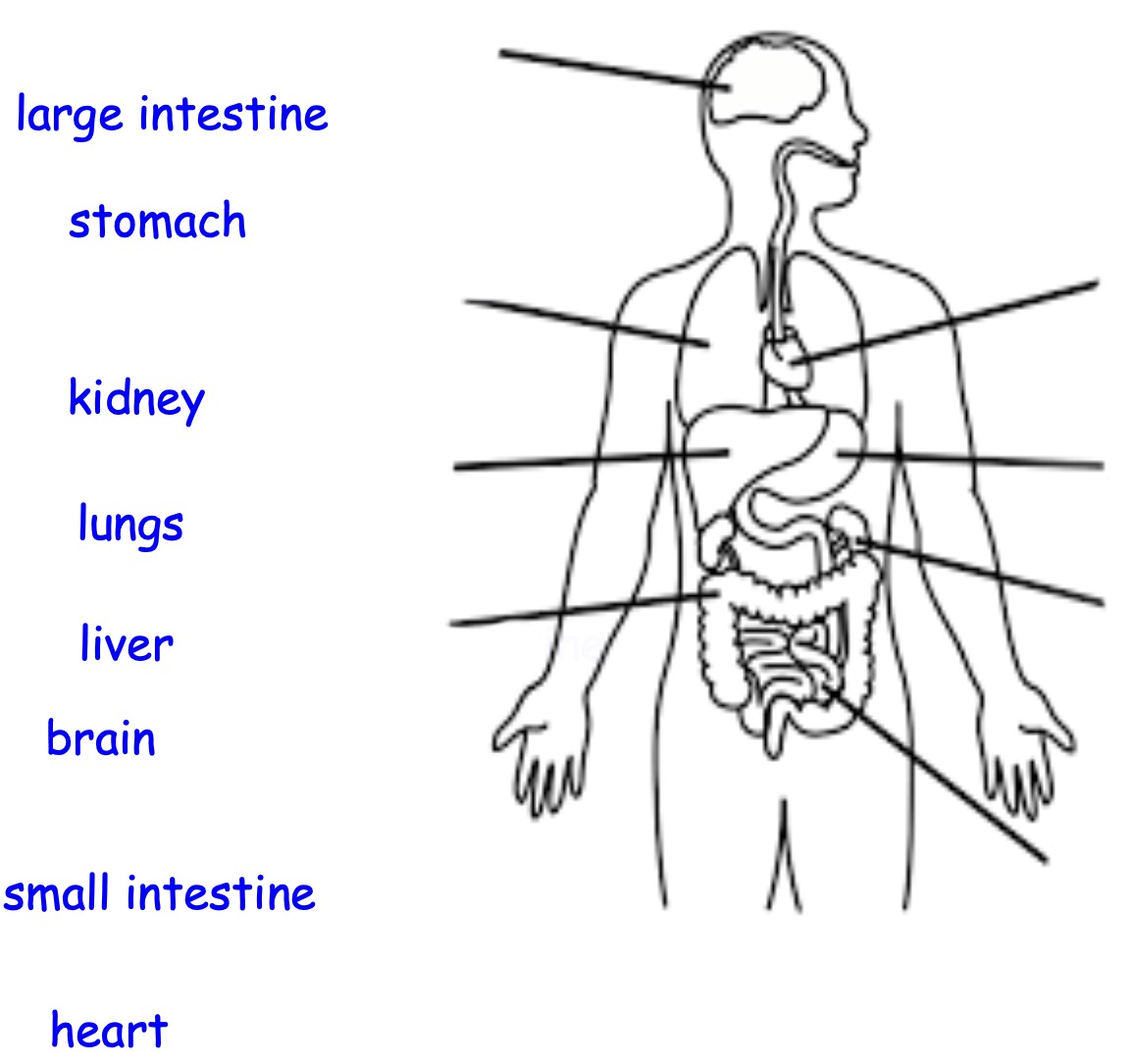
Organs
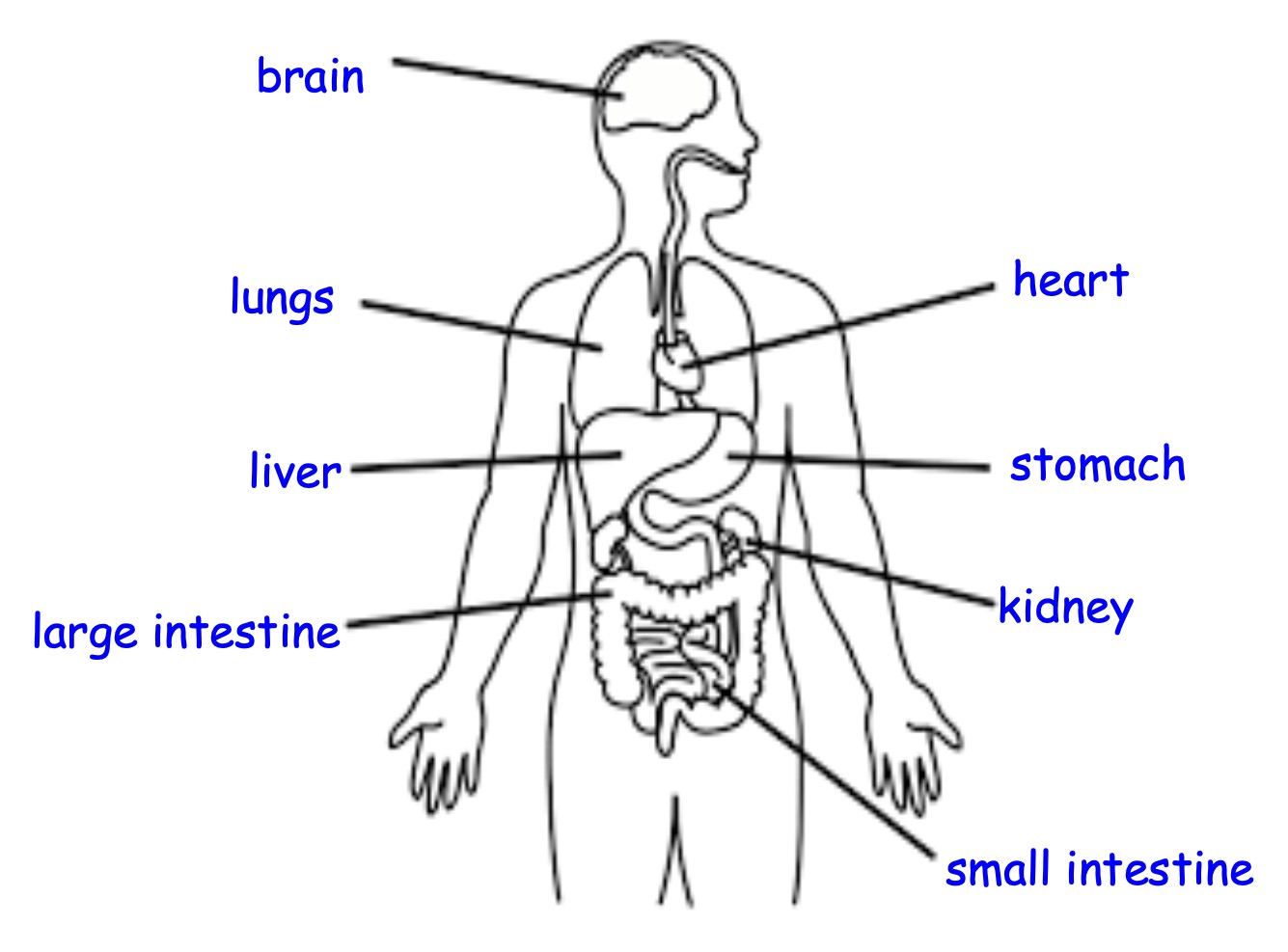
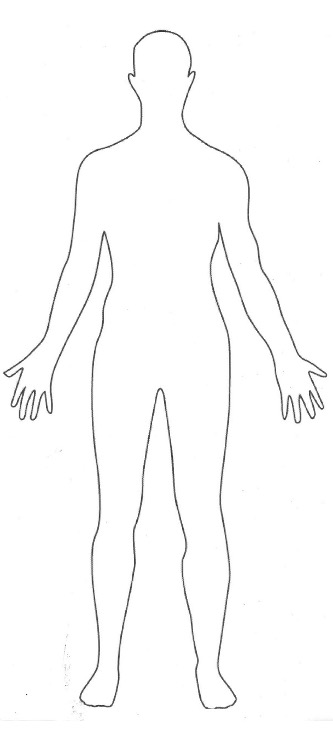
Stick the diagram of the human body into your jotter and label each organ
Lesson 2 - The Digestive System
Learning Intentions
- To be able to identify and label all the parts of the digestive system and describe what role they play in digestion.
The Digestive System
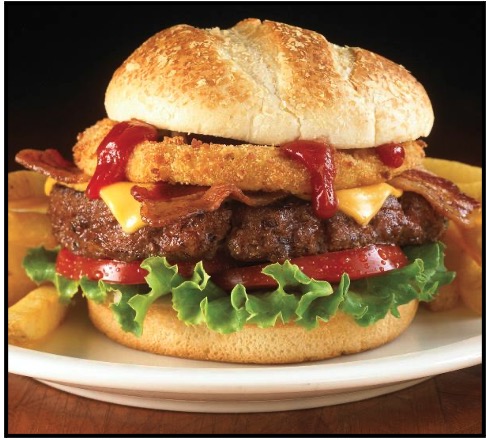
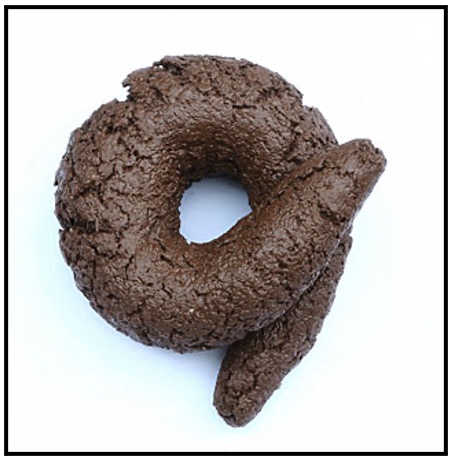
How do we get from this... to this?
Starter
-Think, pair, share... (90 seconds)

What happens to your food when you swallow it?
Digestion
Digestion is the breakdown of large molecules in food into smaller molecules so that they can be absorbed into the blood.
This is important to get the nutrients needed for energy, growth and repair.
The Digestive System
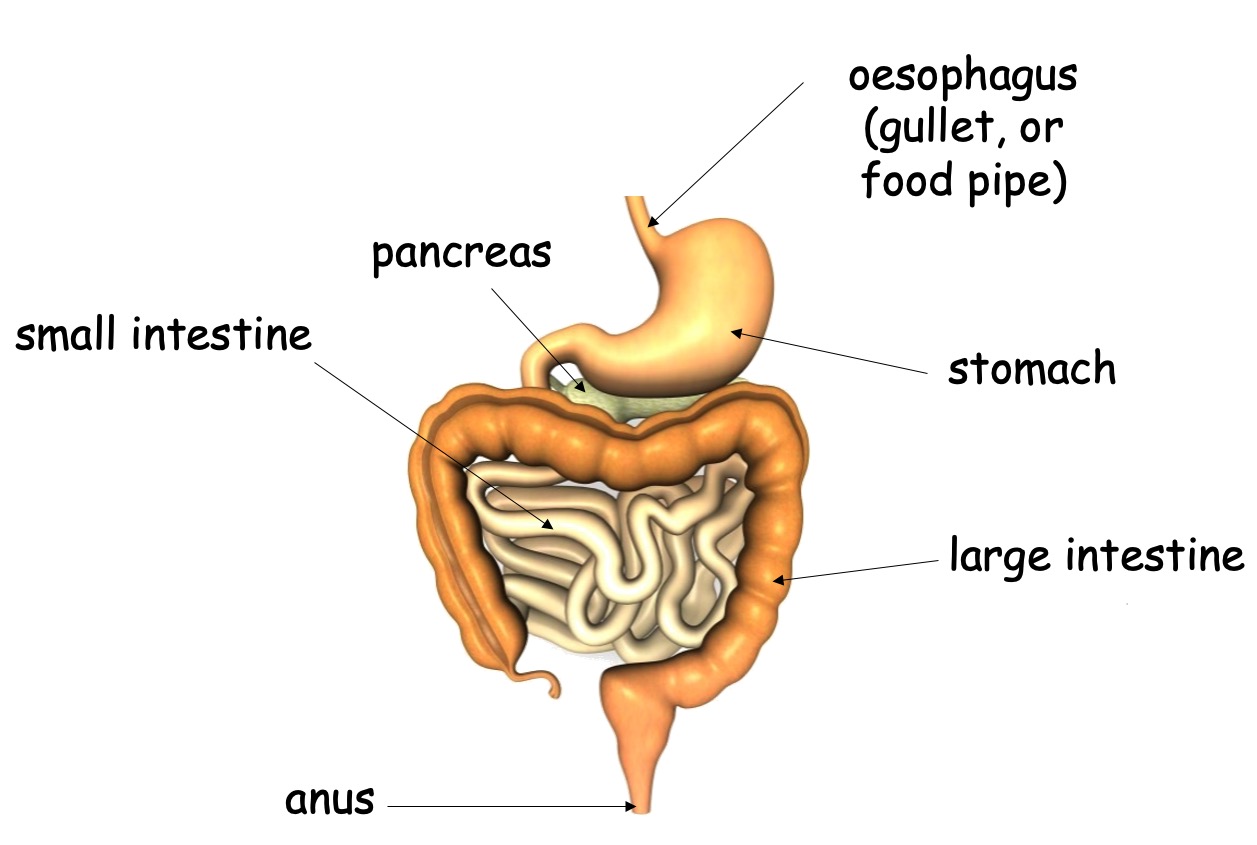
Each part has a different job to do:
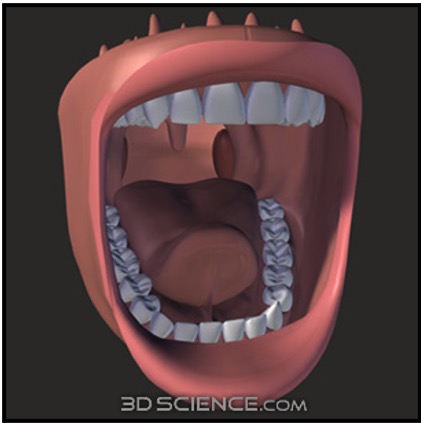
1. The Mouth
The mouth contains teeth.
These chew the food and break it into smaller pieces.
The tongue pushes food to the back of the mouth so you can swallow it.
2. The Oesophagus
The oesophagus, or food pipe, joins the mouth and the stomach.
Food is squeezed along this tube into the stomach.
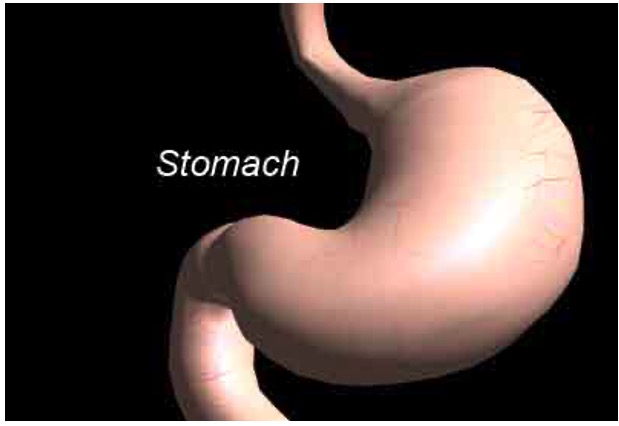
3.The Stomach
The stomach is a bag of acid.
The acid in the stomach, and special chemicals called enzymes break down the food even more.
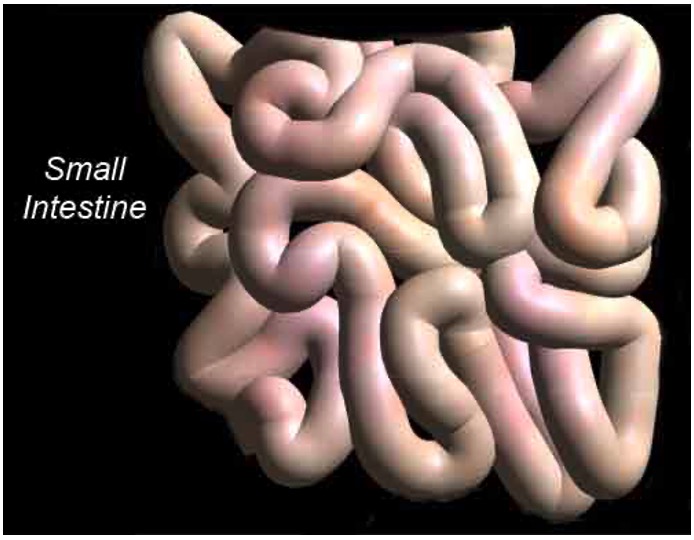
4. The Small Intestine
The small intestine is 6-7 metres long.
In the small intestine, the broken down food gets into the blood so the body can use it.
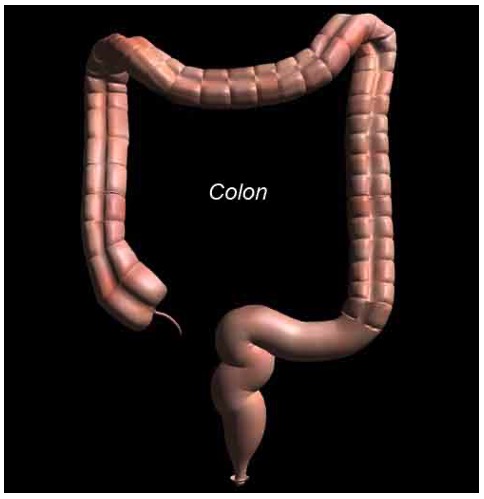
5. The Large Intestine
The large intestine is about 1.5 metres long.
In the large intestine, the body absorbs a lot of water back from the digested food.
At the end of the digestive system, the left over stuff that the body can't use leaves the body through the anus when you go to the toilet.
Demonstration - Gums to Bums!
Your teacher will show you a demonstration of the digestive system.
Activity - The Story of Digestion
Using the words in the word bank provided, describe the story of digestion.
There are six parts to the story. You can demonstrate this in a step by step description or by creating a digestive system storyboard.
- Mouth: food, mouth, teeth, breakdown, saliva, enzymes
- Oesophagus: swallow, oesophagus, muscles, push
- Stomach: stomach, acid, churned
- Small intestine: small intestine, bile, nutrients, absorbed, blood
- Large intestine: large intestine, undigested material, water, absorbed
- Rectum: waste, stored, rectum, exit, anus
Lesson 3 - Energy in Food
Learning Intentions
- How much energy is present in different foods.
Starter
What types of food do you think give us the most energy?
Experiment - Burning Food
Aim
To find out if fats, proteins or carbohydrates produce the most heat energy on burning.

Results

Method
- Use a measuring cylinder to put 20ml of water into the boiling tube.
- Measure the temperature of the water in the boiling tube and record the reading in a table.
- Set the food on fire and hold it under the boiling tube of water.
- Measure the temperature of the water again when the food stops burning and record your reading.
- Share results for the other food types with others.
Conclusions
What was your aim?
What do your results tell you (thinking about your aim)?
Why do you think this happened?
Evaluation
How could the experiment be improved? Fairer? More Accurate?
Energy Balance
Lesson 4 - Energy in Food (Skills)
Learning Intentions
- Use collected data to create a bar graph.
- Write an experimental report.
Pretest Booklet
What have you learned so far?
Fill in your pretest booklet.
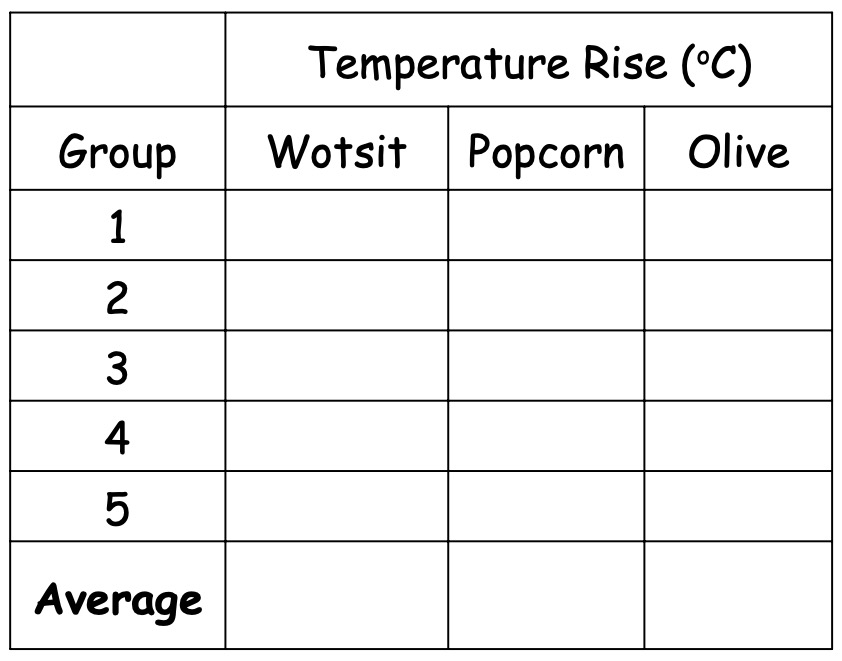
Collating Data
Find your table from the last lesson.
Using your results and results from 4 other groups, calculate an average increase in temperature for the crisp, popcorn and olive.
Hint: For an average, add up all of the numbers in that group and divide by the number you have added.
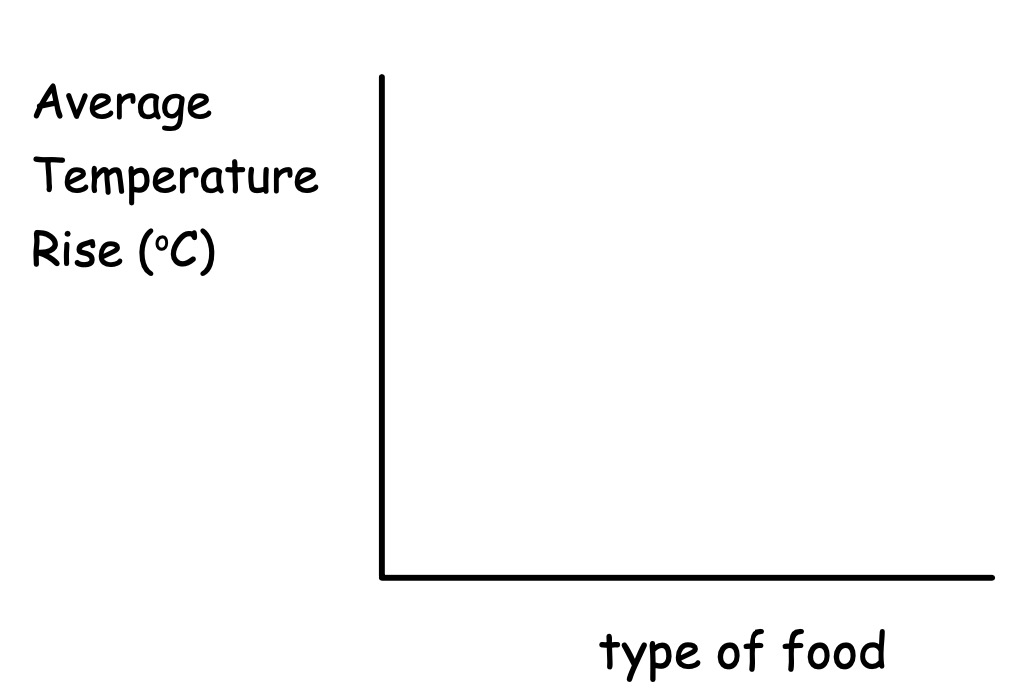
Drawing a Bar Graph
Use the worksheet to help you to draw a bar graph of the results that you have collated.
Writing a Report
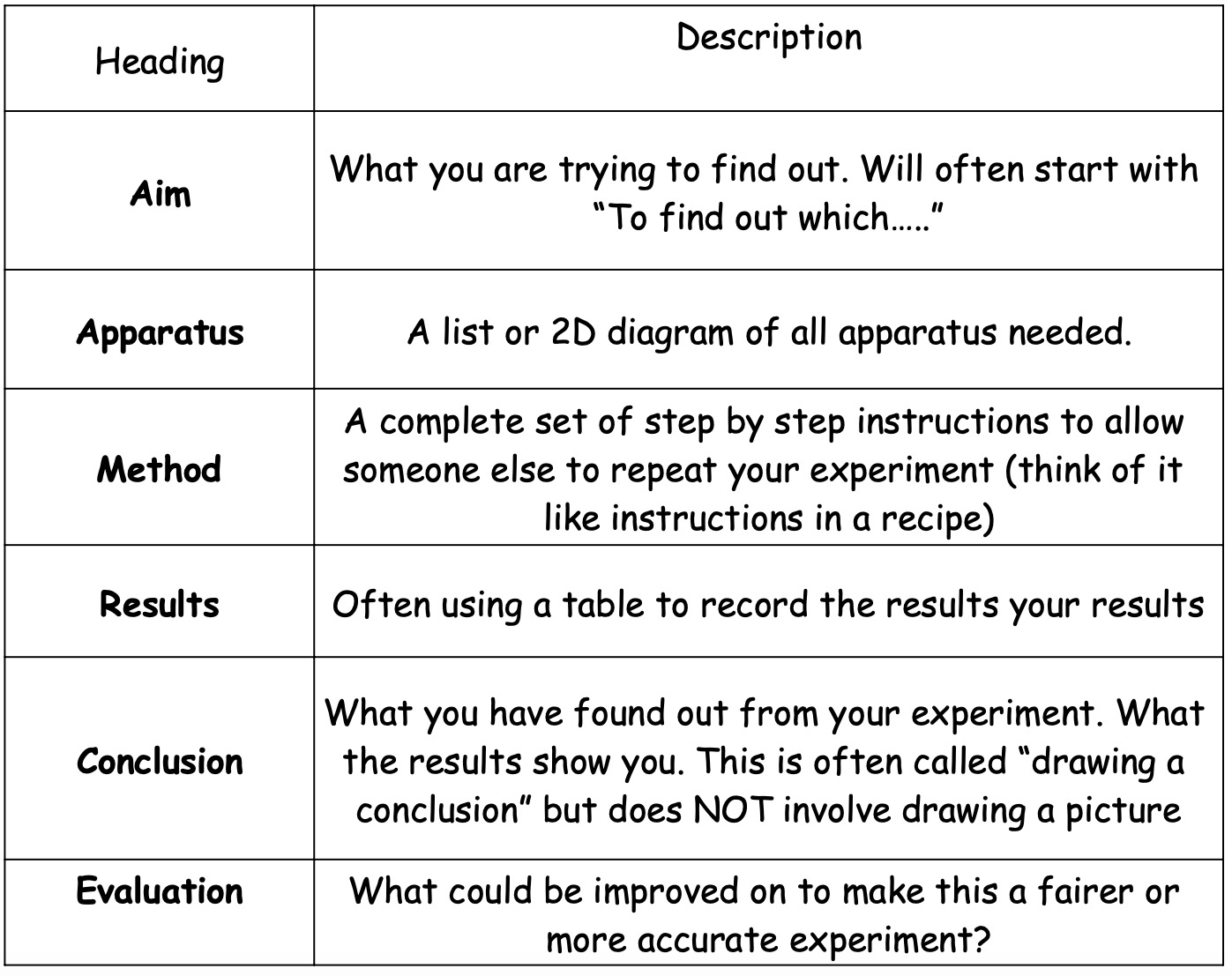
Write an experimental report using your template for the Energy in Food experiment. It should include the following:
Lesson 5 - Food Tests
Learning Intentions
- Understand the main components of the human diet.
- Test for the presence of starch, glucose, protein and fat in a food sample.
Starter
1. Can you name the 4 food groups of the human diet?
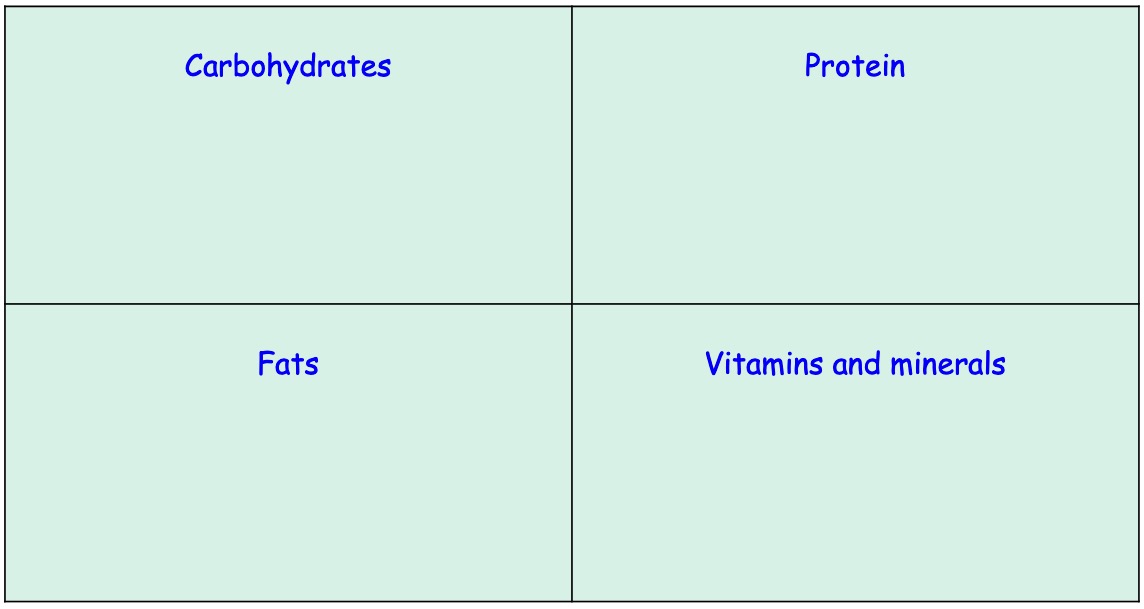
2. Can you think of which foods might be found in each group?
Experiment - Testing Food
We are going to carry out experiments to test for carbohydrates (starch and sugar), protein and fats.
Make sure that you have collected the handout below.
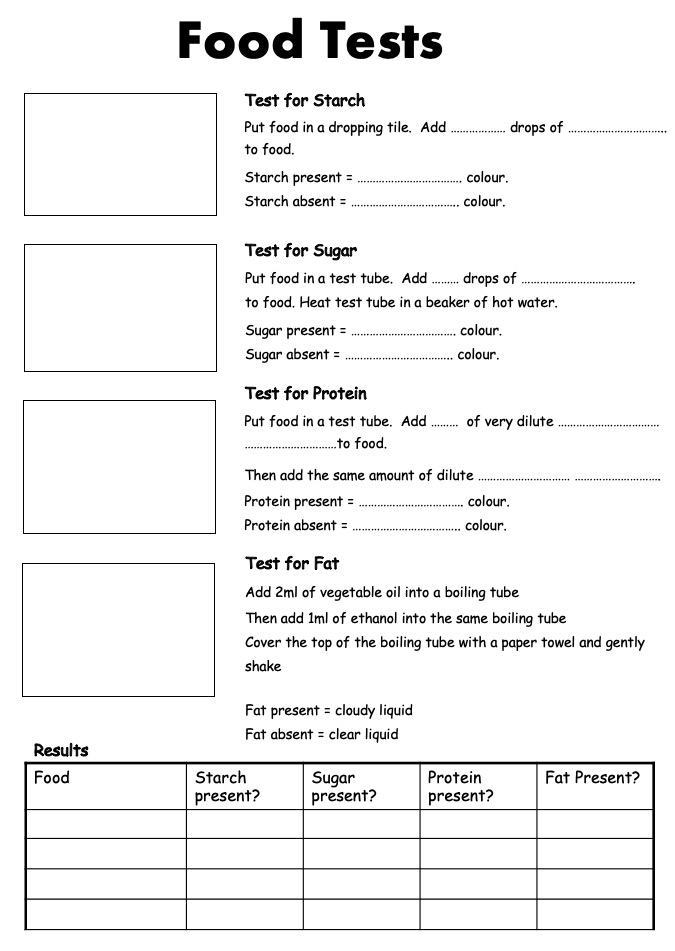

Testing for Starch
- Place 1 piece of bread on a dimple tray.
- Add 1 drop of iodine onto the bread.
- What happens? Write down your observations.

Testing for sugars
- Add 2ml of glucose water into a boiling tube.
- Half fill a beaker with boiling water from kettle (ask teacher)
- Place boiling tube in beaker and leave for 30seconds then add 1ml of Benedict's solution
- Wait for several minutes...
- What happens?
- Write down your observations.
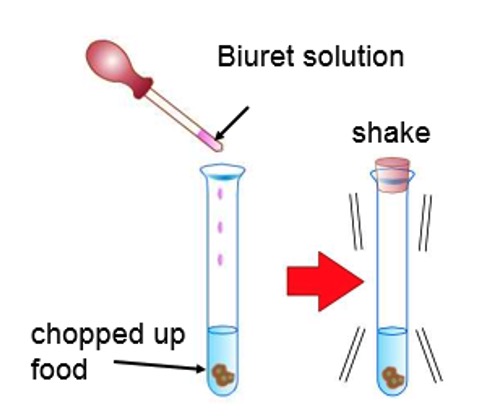
Testing for Proteins
- Add 2mls of pea liquid into a test tube.
- Add 5mls of Biuret solution.
- What happens?
- Write down your observations.
Testing for Fats
- Add 2ml of vegetable oil into a test tube.
- Then add 1ml of ethanol into the same test tube.
- Cover the top of the test tube with a paper towel and gently shake.
- Pour the mixture into a test tube of water. A cloudy white layer shows that fat is present.
- What happens?
- Write down your observations.
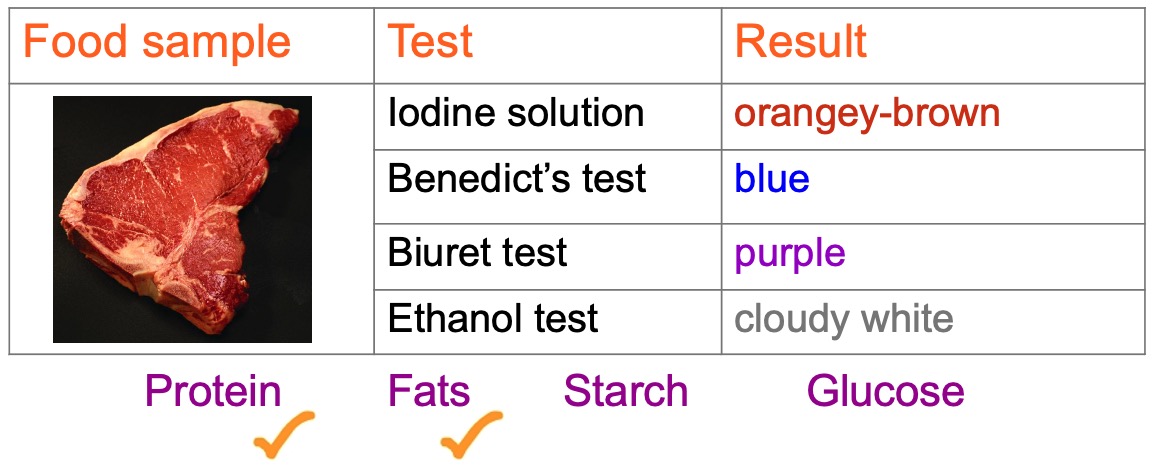
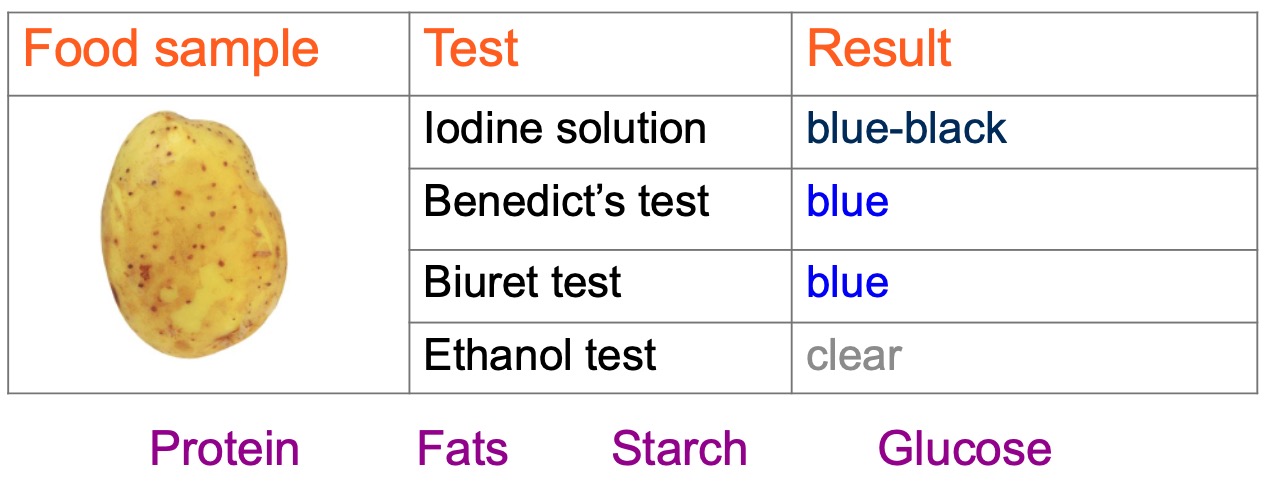
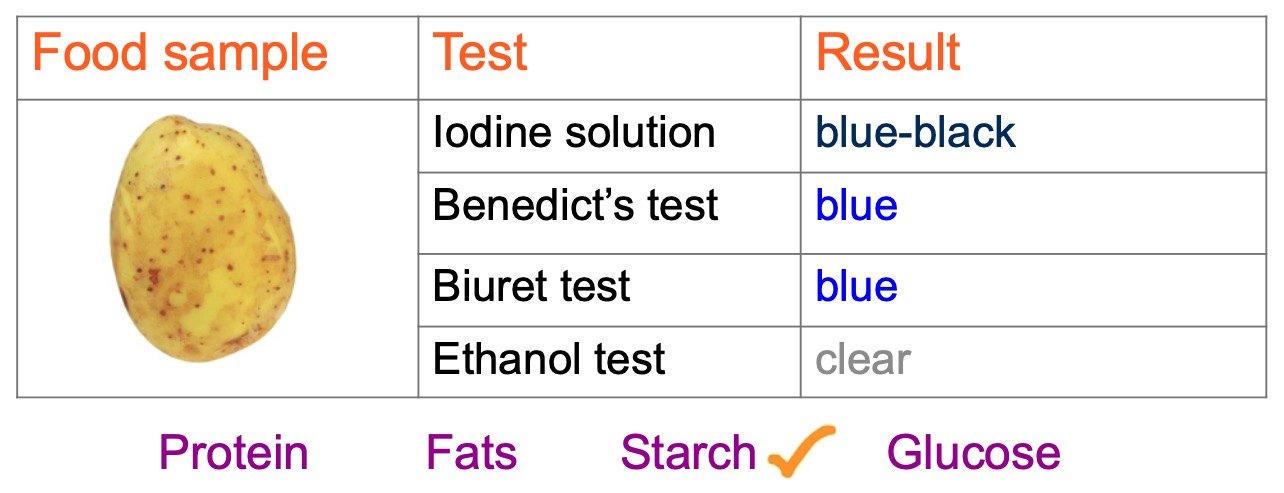
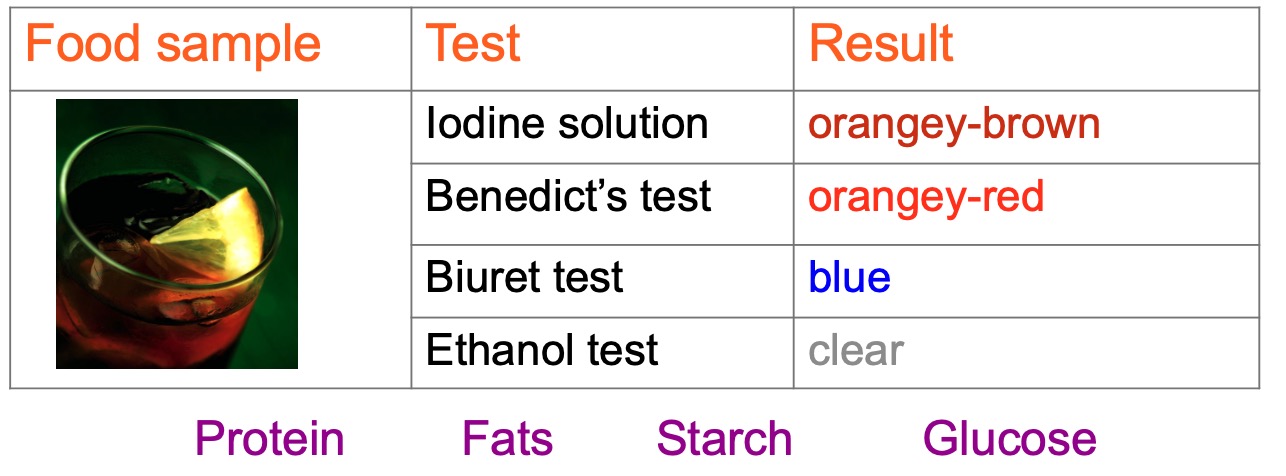
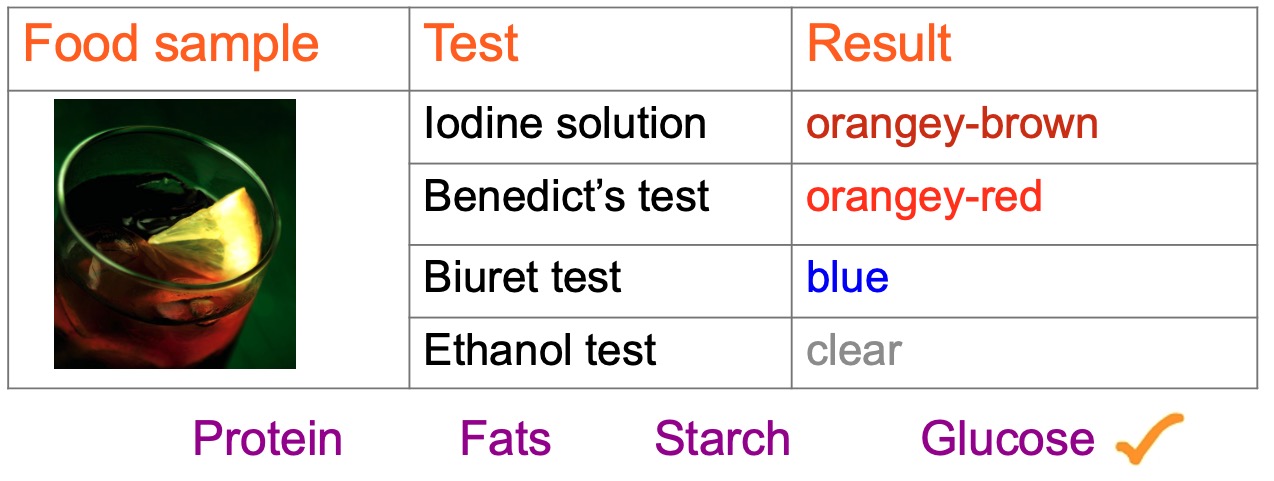
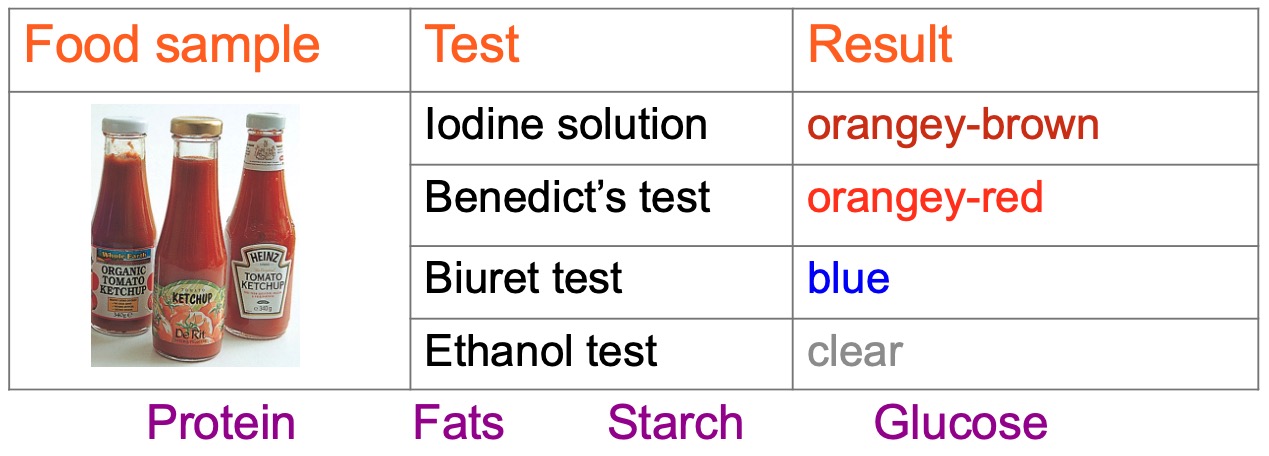
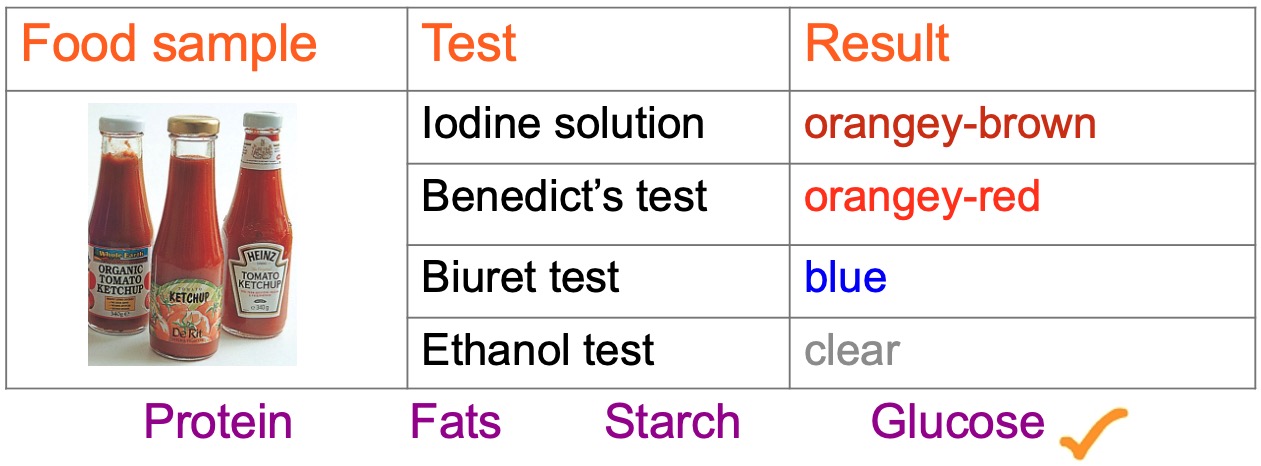
Food Test Quiz
Now see if you can use these tests you have just used to identify the food chemicals found in different foods.
For each food, decide on the chemicals found in them.

Quick Quiz - Food Tests
1. A balanced diet...
- contains the same amounts of the main food groups
- contains healthy amounts of the main food groups
- doesn't fall off the table
2. A balanced diet for most people has more...
- fat than water
- carbohydrate than protein
- crisps than fruit
3. To test for protein in food you...
- add iodine solution
- do the Biuret test
- poke it with a big stick
4. Sugar and starch are both...
- proteins
- fats
- carbohydrates
5. Iodine solution turns blue-black with...
- starch
- protein
- age
6. A food went orangey-red when it was boiled with Benedicts solution. It could be...
- a carrot
- a boiled sweet
- a sausage
Lesson 6 - Why do we eat?
Learning Intentions
- Name the 4 main groups
- Understand what is meant by the term balanced diet
Why do we eat?
Our bodies need food to make us work just like a car needs petrol.
We can't make food (like plants) so we need to eat!
What do we need food for?
- Energy
- Growth
- Maintenance and repair
- Pleasure
How can food be good for our body?
Think, pair, share
What is a balanced diet?

World Health Organisation - 5 points for healthy people:
- Eat in balance (eat what you burn off)
- Eat more fruit and vegetables
- Eat less fats
- Eat less sugar
- Eat less salt
What is an Unhealthy Diet?

- no nutrients
- too much food
- no variety
- too much bad food
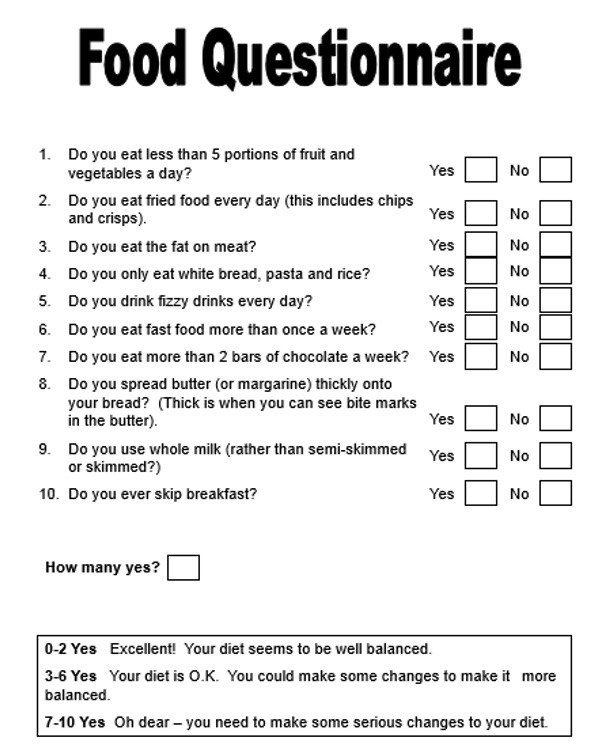
Complete a food questionnaire to see how balanced your diet is.
Activity - Food Groups
Copy and complete the table below using the Food group information cards that you have been provided with.
| Food Group | What is it used for? | Example of this food |
| Carbohydrate | ||
| Fat | ||
| Protein | ||
| Vitamins and minerals | ||
| Fibre |
Lesson 7 - The Respiratory System
Learning Intentions
- I can label a diagram of the respiratory system.
- What is the function of the structures of the respiratory system.
The lungs
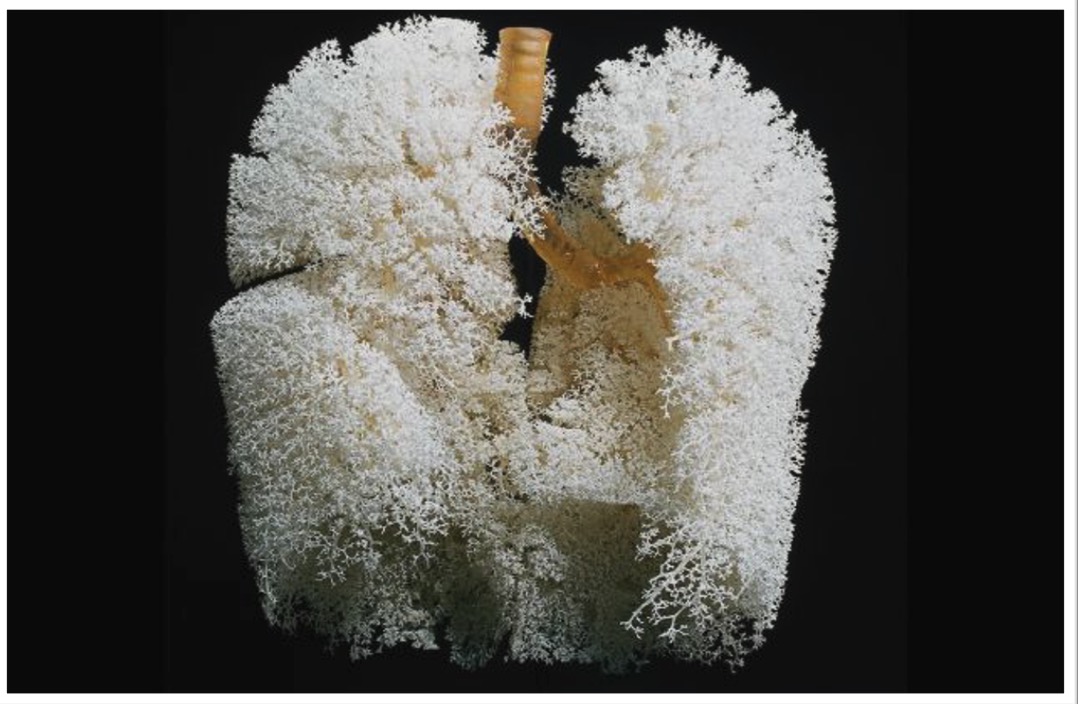
Breathing Facts
A person usually breathes an average of 13 pints of air every minute.
Adults typically take around 20,000 breaths a day with 15 to 20 breaths a minute - Newborn babies take 40 breaths a minute.
Lungs aren't the same size. To accommodate the heart, the right lung is larger than the left lung - for humans, that is.
Lungs and tennis courts can be the same size. (surface area)
Children and women breathe faster than men.
Oxygen only plays a small part in breathing. The air we breathe contains 21% oxygen, but our bodies only use 5% - the rest is exhaled.
A few examples of lung disease are asthma, bronchitis, emphysema, lung cancer and pneumonia.
How lungs work
Collect a copy of the lungs cut out from your teacher. Complete it then stick it in your jotter.
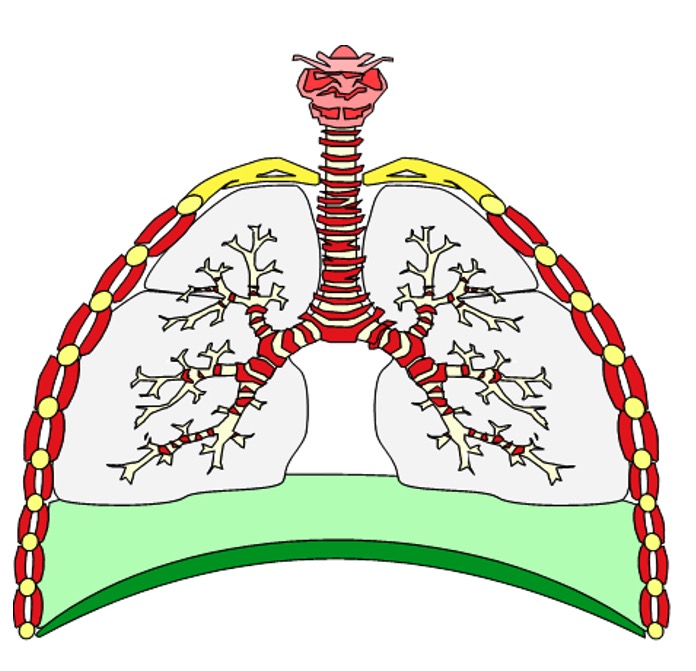
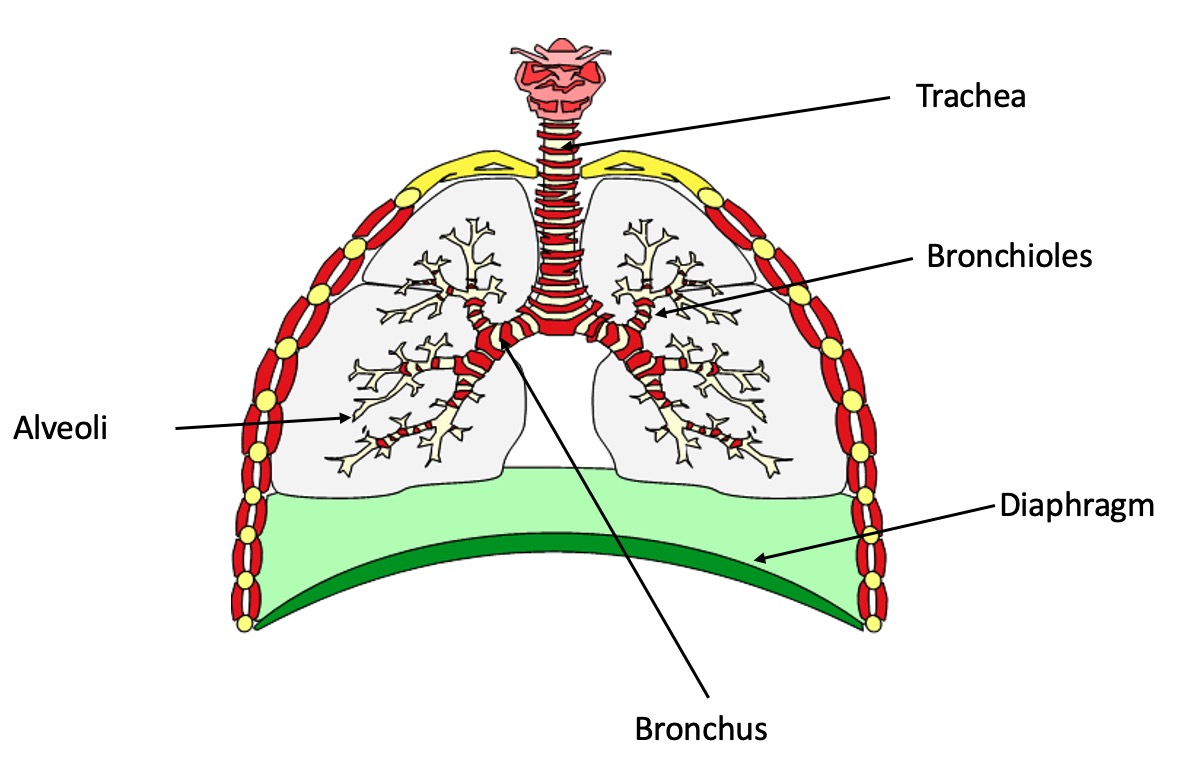
The alveoli are bunches of tiny air sacks inside the lungs.
Gas exchange occurs at the alveoli.
When you breathe in, they fill with air.
Lung Dissection
Notes - Respiratory System
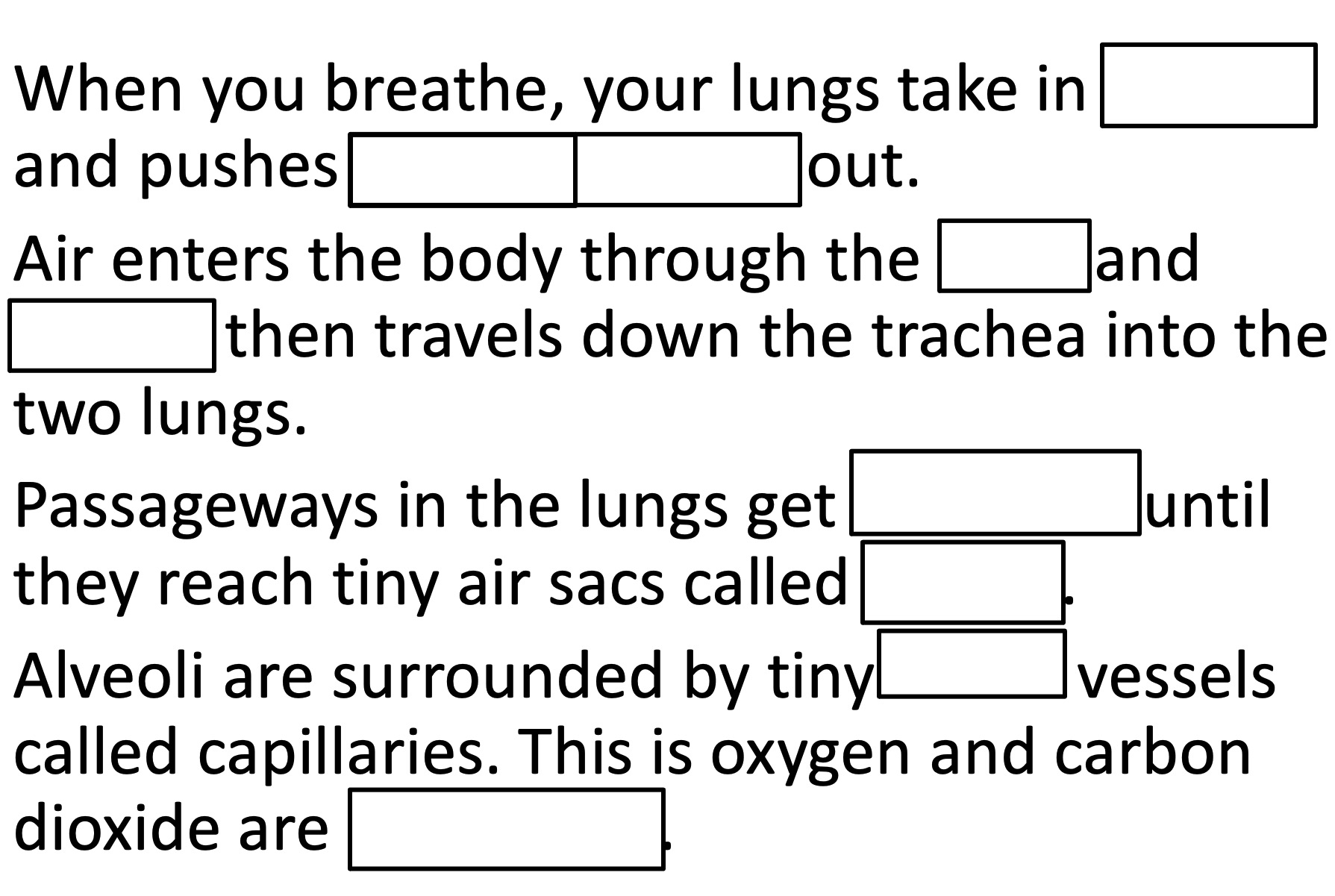

Smoking
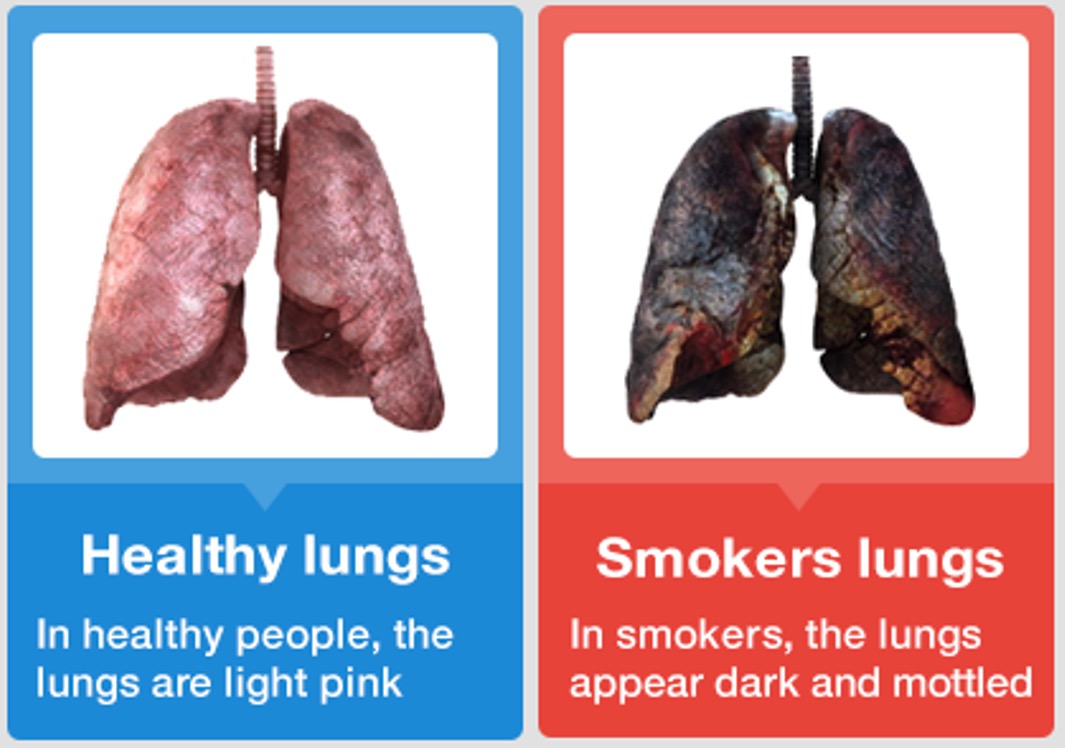
Your lungs can be very badly affected by smoking.
There are:
- approximately 250 poisonous gases in cigarette smoke
- Approximately 70 of the chemicals in cigarettes are known to cause cancer.
Coughs, colds, wheezing and asthma are just the start.
Smoking can cause fatal diseases such as pneumonia, emphysema and lung cancer. Smoking causes around 7 in 10 cases of lung cancer in the UK.
What's in a cigarette?

Lesson 8 - Measuring Lung Capacity
Learning Intentions
- To understand what is meant by the Lung Capacity
- Investigate different ways to measure Lung capacity
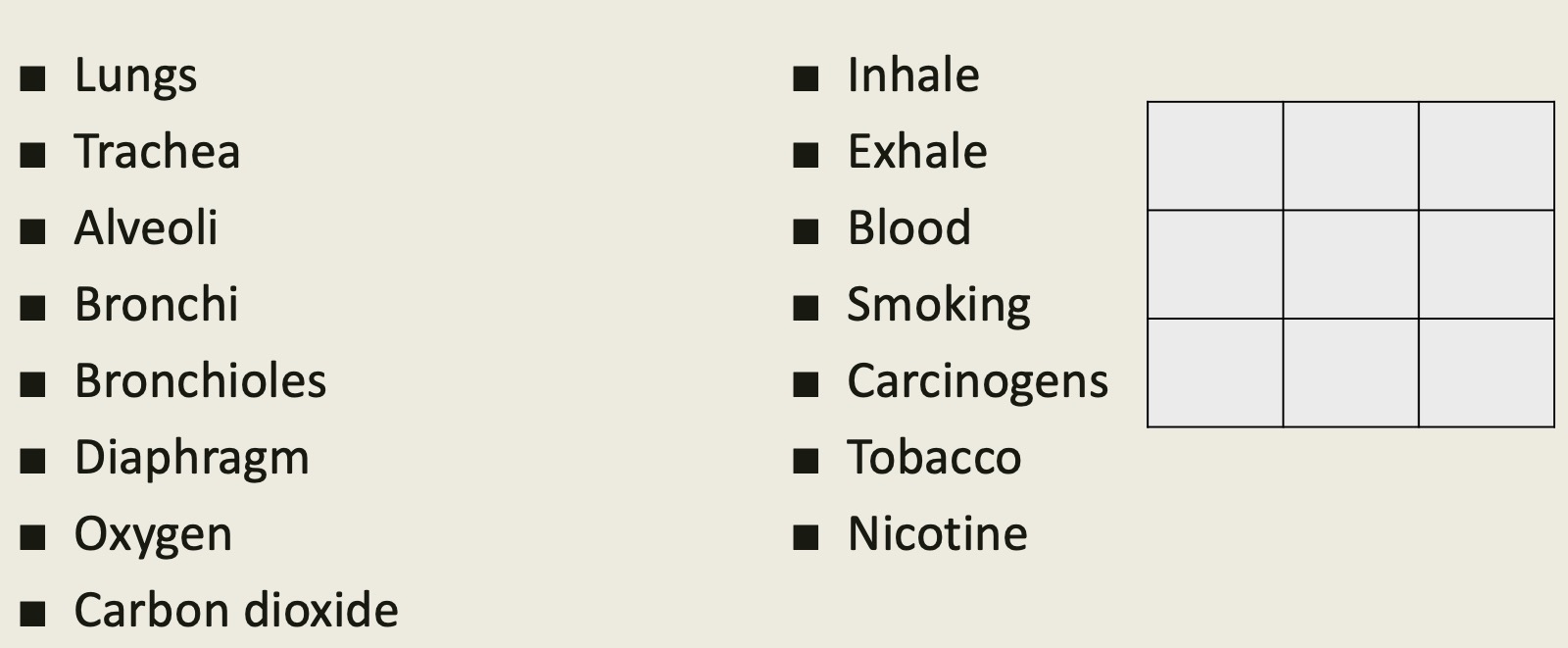
Starter - Bingo
Choose any 9 words for your bingo grid
Measuring Lung capacity
Lung capacity is the maximum volume of air that we breathe out after taking a deep breath in.
In other words it is the amount of air you can fit in your lungs in one breath.
Doctors measure lung capacity to measure how healthy your lungs are.
In the classroom there are two ways that we can look at lung capacity:
- Balloon
- Tidal Volume
Measuring Lung Capacity - Balloon
COPY DOWN THIS TABLE INTO YOUR JOTTER
| Reading | Balloon diameter (cm) |
|---|---|
| 1 | |
| 2 | |
| 3 | |
| Average |
INSTRUCTIONS
- Each table is going to be given two balloons.
- Select two people to be the balloon blowers.
- Take a deep breath and exhale (breathe out) fully to expand.
- Repeat 3 times and take an average.
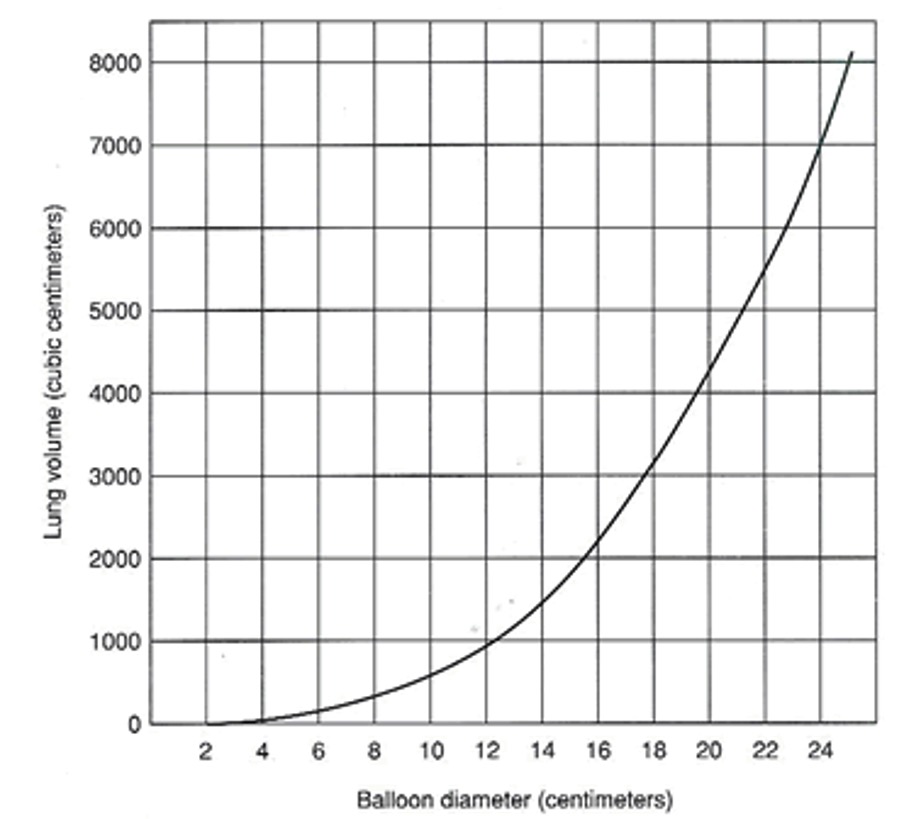
- Now use your average balloon diameter score to discover your groups lung capacity.
Results
Use your average result and the graph below to work out your lung capacity.
Measuring Lung Capacity - Sweetie jar
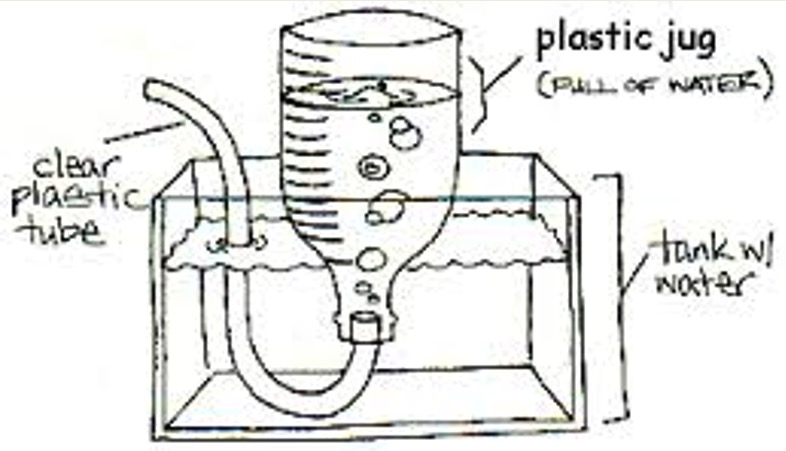
Another method that can be used is using the sweetie jar.
It works on the principle of displacement.
Lesson 9 - The Heart
The Learning Intentions
- I understand the function (job) of the heart.
- I can identify the different parts of the heart.
Starter
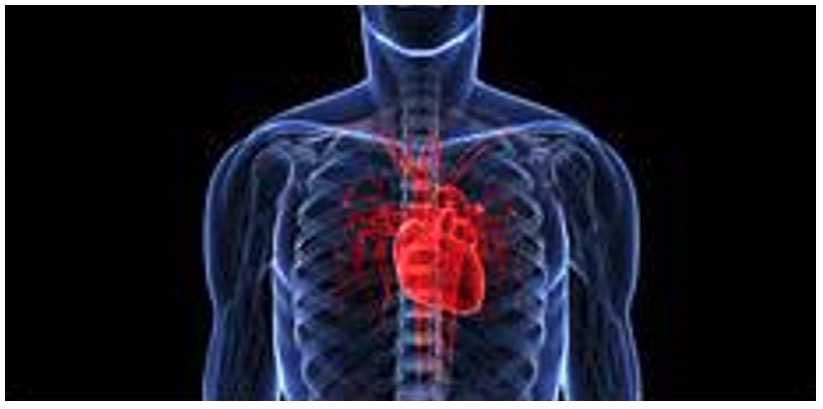
Where is the heart found in the human body?
The Heart
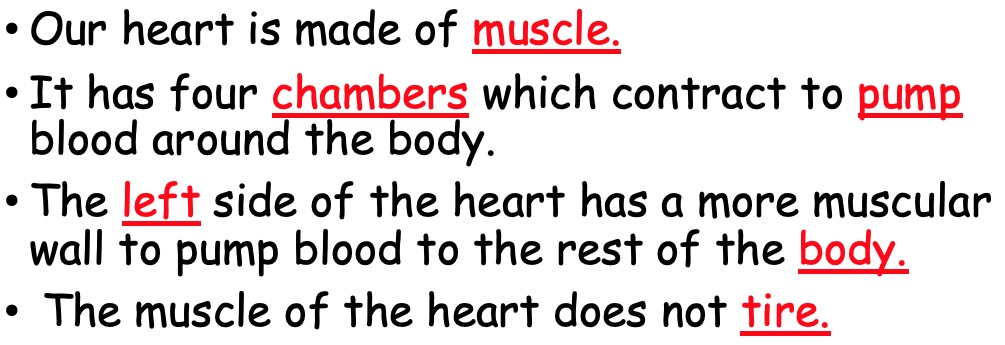
Your heart is a muscle about the size of your fist.
It is constantly beating, on average about 1 beat every second.
Task 1
Open and close your fist, once every second. Do you get tired quickly? Does your heart get tired?
Task 2
Use the stethoscopes to measure your heart rate. See if you can hear your or your partners heart beat!
How does the heart pump blood around the body?
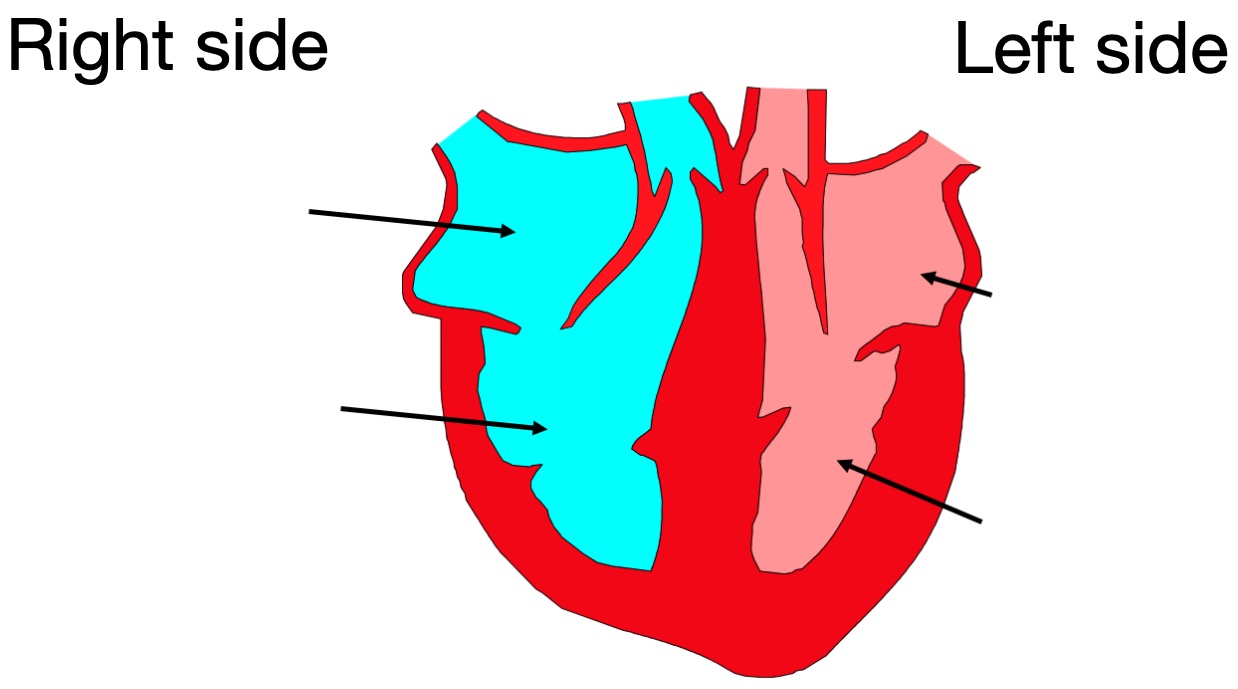
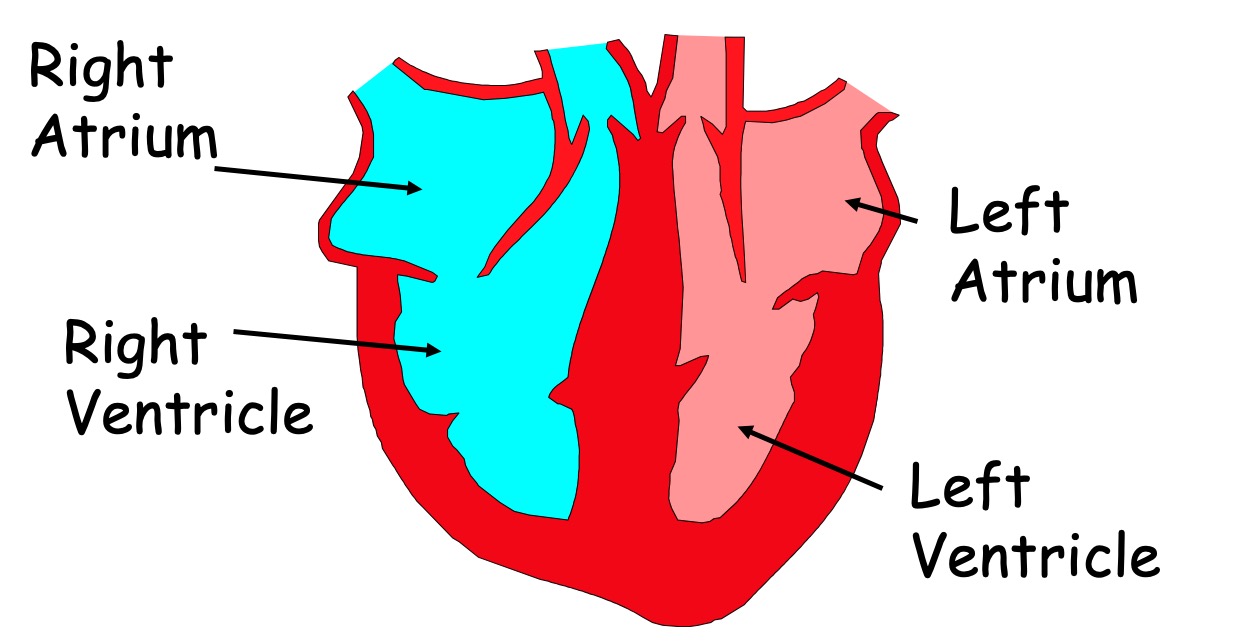
The heart is a muscular organ that is divided into 4 chambers: 2 atria and 2 ventricles.
It is known as a double pump!
The left ventricle wall is very thick because it has to pump blood all round the body.
The right ventricle wall is less thick since it just pumps blood to the lungs.
The Heart Structure
Stick the heart diagram into your jotter and label the right and left side of the heart (be careful to get this right).
Notes - The Heart

Heart dissection
Lesson 10 - The Effect of Exercise on Heart Rate
Learning Intentions
- To understand how exercise affects heart rate.
What is a healthy heart?
Spot the differences between the healthy and damaged hearts.
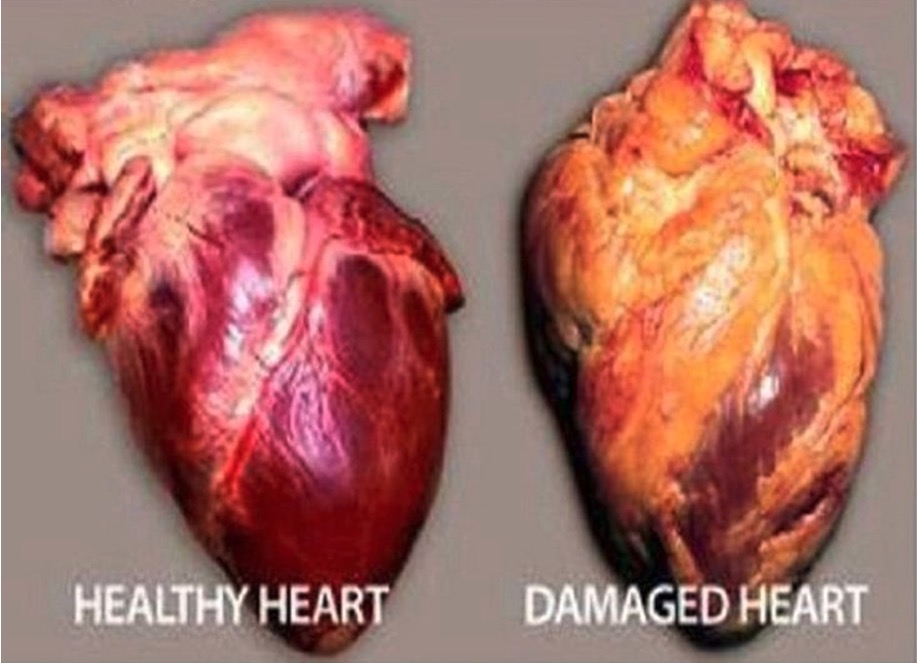
What causes a damaged heart?
Exercise and the heart
Exercise is a good way to stay healthy - without it the body becomes more prone to injury, illness and disease.
Complete the mind map by considering which exercises would be good for heart health.
How does exercise benefit the heart and body?
Guidelines for 5 to 18 year-olds
To maintain a basic level of health, children and young people aged 5 to 18 need to do:
- at least 60 minutes of physical activity every day this should range from moderate activity, such as cycling and playground activities, to vigorous activity, such as running.
- several times a week, these activities should include exercises for strong muscles, such as push-ups, and exercises for strong bones, such as jumping and running
Many vigorous activities can help you build strong muscles and bones, including anything involving running and jumping, such as gymnastics, martial arts and football.
Children and young people should reduce the time they spend sitting watching TV, playing computer games and travelling by car when they could walk or cycle instead.
Measuring Heart Rate
You will need:
- Timer
- Pen or pencil
- Jotter
- Find your pulse?
- Count how many times your heart beats in 15 seconds.
- Work out how many times it will beat in a minute. (hint: x your answer by 4)
- This is your resting heart rate.
Complete the following table by carrying out the following activities recording your heart rate after each.
| Activity | Beats per 15 seconds | Beats Per Minute (BPM) |
|---|---|---|
| Sitting down | ||
| Standing up | ||
| Walking (30s) | ||
| Stand Up / Sit down (30s) | ||
| Dancing | ||
| Running / Stairs |
What type of activity increased your heart rate the most?
How Does Exercise Affect Your Heart?
Read through the information sheet "How does exercise affect your heart?"
Answer the questions that you will find over the page.